If you’ve ever worked in industrial temperature measurement—whether in steel mills, food processing plants, or petrochemical refineries—you’ve probably heard the term “compensating cable” tossed around. But have you ever stopped to ask: What exactly is its voltage rating, and why does it matter? As a supplier who’s been deep in the compensating cable business for over a decade, I’ve answered this question hundreds of times for engineers, plant managers, and even new techs who’re still learning the ropes. Today, I’m breaking it down in plain, no-fluff terms—no overly complicated jargon, just what you need to know to keep your temperature measurement systems accurate and safe. Compensating Cables
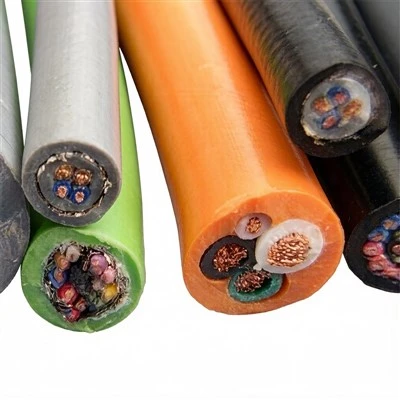
First, let’s start with the basics to set the stage. Compensating cables (often called “comp cables” for short) aren’t your standard electrical wire. Their whole job is to extend the reference junction of a thermocouple—those two dissimilar metal wires that generate a tiny voltage proportional to temperature—from the point of measurement (say, a 1,000°F furnace) to a remote temperature controller or display. The key here is that comp cables are matched to their specific thermocouple type: Type K, Type J, Type T, Type E, and so on. They’re made of the same (or thermoelectrically identical) materials as the thermocouple’s extension wires, so they don’t introduce extra error that would throw off your temperature reading.
Now, voltage rating is all about insulation. Every wire, regardless of purpose, has an insulation layer that protects against short circuits, electrical noise, and damage from the environment. That insulation is rated for a maximum voltage—go above that, and the insulation can break down, leading to possible equipment damage, fire hazards, or inaccurate measurements. For compensating cables, this voltage rating isn’t a random number pulled out of thin air; it’s standardized across the industry, but it’s not one-size-fits-all.
Let’s get specific. The most common voltage ratings for standard compensating cables are 300V and 600V. Wait, why two? It comes down to how the cable is used. If you’re running comp cable inside a control panel, where it’s separated from higher-voltage power lines by a barrier, 300V is usually more than enough. But if you’re running it exposed in a raceway along with 120V or 240V AC power cables, or if it’s going through an area where it might be damaged and come into contact with higher voltages, you’ll want a 600V rated cable. I’ve seen too many cases where a plant saved a few bucks on lower-voltage comp cable only to have a wire fray, touch a 480V power line, and take out a $10,000 temperature controller—costing way more than the difference between 300V and 600V cable.
But here’s where it gets more nuanced: the voltage rating is also tied to the insulation’s temperature rating. Insulation materials like PVC, Teflon (PTFE), and cross-linked polyethylene (XLPE) all have different maximum temperature limits. For example, a standard PVC-insulated Type K comp cable has a 300V rating, and its insulation can handle up to 105°C (221°F) continuously. If you need a cable that can stand up to higher ambient temperatures—say, in a boiler room where ambient temps hit 150°C (302°F)—you’ll need a higher-temperature insulation, which usually comes with a higher voltage rating. Teflon-insulated comp cables, for instance, often have a 600V rating and can handle up to 200°C (392°F). That’s not a coincidence; the insulation’s material properties determine both its temperature and voltage limits.
Another point to remember: the voltage rating applies to the cable under ideal conditions. If the cable is run in harsh environments—extreme cold, exposure to chemicals, or constant vibration—the insulation’s performance can drop, which means its effective voltage rating might be lower. For example, a cable run in a corrosive refinery atmosphere might need a higher initial voltage rating to account for insulation degradation over time. As a supplier, we always ask customers about their environment before recommending a cable; that’s why generic “300V vs 600V” questions aren’t enough—we need to know where the cable is going.
Wait, let’s clear up a common myth. Some people think that because compensating cables carry such a tiny voltage (thermocouples only generate millivolts—like 50mV at 1,000°C), their insulation doesn’t need a high voltage rating. That’s wrong on two counts. First, even though the signal voltage is tiny, the cable has to withstand the voltage of the surrounding electrical system. If it’s run next to 480V power, the insulation has to isolate the low-voltage thermocouple signal from that higher voltage to prevent noise that would mess with accuracy. Second, in some cases—like if a thermocouple short-circuits inside a high-temperature furnace—the comp cable could be exposed to higher voltages indirectly. So even for low-signal applications, voltage rating is a safety and accuracy issue, not just a power concern.
Let me share a real example from a customer of mine last year. A food processing plant was using Type J comp cable with 300V insulation to run from their ovens to the control room. They had their comp cable run in the same raceway as 240V heating cables. After a few months, one of the comp cables’ insulation wore through from vibration, and it touched the heating cable. The result: a short circuit that tripped the main oven power, costing them two hours of production and ruining a batch of dough they’d been fermenting overnight. We suggested they switch to 600V rated Type J comp cable the next time they ordered, and since then they haven’t had a single issue. That’s the kind of real-world problem we see every day, which is why voltage rating isn’t just a spec—it’s a critical part of system reliability.
Now, are there exceptions to the 300V/600V rule? Yes, for specialty applications. For example, high-temperature compensating cables used in aerospace or nuclear power plants might have higher voltage ratings, often 1,000V or more, because they’re exposed to extreme conditions. These are less common in industrial settings, but they’re out there. Conversely, low-temperature comp cables used in refrigerated warehouses might sometimes use a 150V rating if they’re only run in low-risk environments. But for 90% of industrial applications, 300V and 600V are the go-to standards.
Another factor: national and international codes. In the U.S., the National Electrical Code (NEC) sets standards for voltage ratings of cables based on installation method and environment. For example, NEC Article 725 (which covers remote-control and signaling circuits) specifies that compensating cables, being signaling circuits, must have an insulation voltage rating appropriate for their location. In Europe, the IEC standards do the same thing, often harmonizing with NEC but with some slight variations. As a supplier, we make sure all our comp cables meet both NEC and IEC requirements, so you don’t have to worry about code compliance when you install them.
Let’s talk about how to choose the right voltage rating for your application. First, check the installation location: is the cable run exposed to higher voltages (power lines, equipment)? If yes, go for 600V. If it’s inside a control panel, separated from power, 300V is fine. Second, consider the environment’s impact on insulation: if you’re in a harsh area (corrosive, high temp), go for a higher voltage rating to account for future degradation. Third, verify code requirements for your industry—some sectors, like pharmaceuticals or aerospace, have strict codes that mandate higher voltage ratings for safety.
I’ve had customers come to me saying, “Can I just use a lower-voltage cable to save money?” My answer is always, “It depends, but don’t cut corners.” The difference in cost between a 300V and 600V comp cable is usually less than 10%, but the cost of a failure can be thousands of dollars in downtime, repairs, and lost product. In the long run, a slightly more expensive, correctly rated cable is a much better investment.
As a supplier, we test every batch of compensating cables to confirm their voltage rating. We don’t just rely on manufacturer specs—we run our own insulation resistance tests and dielectric strength tests to make sure the cable can handle the rated voltage. For example, when we get a shipment of Type K 600V comp cable, we test a sample to make sure it doesn’t break down at 600V AC for 1 minute, which is the industry standard test. That’s the kind of quality control we stand behind, because we know our customers are relying on our cables to keep their processes running safely and accurately.
Now, let’s circle back to the original question: What is the voltage rating of compensating cables? It’s not a single number—it’s a spec that depends on the cable’s insulation material, its intended use, the installation environment, and industry codes. For most industrial applications, it’s either 300V or 600V, but specialty cables can have higher or lower ratings. The key is to match the voltage rating to your specific needs, not just pick the cheapest option or assume all comp cables have the same voltage rating.
At the end of the day, compensating cables are the unsung heroes of temperature measurement. They’re small, often overlooked, but critical to getting accurate readings and keeping operations safe. If you’re not sure which voltage rating is right for your application, or if you have questions about compensating cables in general, I’m here to help. Reach out to our team, and we’ll walk through your project, answer your questions, and make sure you get the right cable for your needs. We’ve been in this business for years, and we’re not just a supplier—we’re a partner to our customers, helping them solve temperature measurement challenges every day.
Compensating Cables Reference
- National Electrical Code (NEC) Article 725: Remote-Control, Signaling, and Power-Limited Circuits.
- IEC 60584-3: Thermocouples – Part 3: Guidelines for the selection and use of thermocouple cables and compensating cables.
- Compensating Cable Manufacturers Association (CCMA) Technical Bulletin: Voltage Rating and Insulation Properties of Compensating Cables.
- ASM International: Temperature Measurement in Manufacturing, Compensating Cable Applications.
Anhui Yuantong Cable Co., Ltd.
As one of the most professional compensating cables manufacturers and suppliers in China, we offer a wide range of cables with superior quality. Please feel free to wholesale bulk customized compensating cables from our factory. Also, pricelist is available.
Address: Yongfeng Industrial Park, Tianchang City, Anhui Province
E-mail: ahytcable@126.com
WebSite: https://www.yuantongcable.net/
