If you’ve ever walked past a soccer field where players were practicing shots, or ducked under a protective barrier at a tennis court during a match, chances are you’ve glanced at the netting holding the space safe. For most people, netting is a background detail—something that’s just there to keep balls from flying into parking lots or stands. But as someone who’s been a square netting supplier for 12 years, I’ve spent countless conversations with facility managers, groundskeepers, and sports directors asking a question: Can square netting actually do more than just catch a stray ball? The short answer is yes, and it’s changed everything for the sports spaces we all play in. Let’s break down why square netting isn’t just a utility—it’s a game-changer for sports facilities of every size and type. Square Netting

First, I should start with what makes square netting different from the more common diamond or hexagonal netting you might see at a neighborhood park. Unlike diamond netting, which stretches into an hourglass shape when under tension, square netting has rigid, equal sides that hold their shape no matter how many high-velocity impacts they take. That structural stability isn’t just a nice-to-have—it’s the foundation of why it works so well for sports facilities. Let’s talk about the core use case most people associate with sports netting: ball containment. A few years back, I worked with a private soccer club in the Pacific Northwest that was having constant issues with their old hexagonal netting. Every fall, when the rain made the field slick and players kicked balls with more force, the netting would sag, stretch, and even tear at the corners. By mid-season, they were patching holes with rope, and sometimes balls would fly over the fence and hit cars in the adjacent residential street. We installed square netting along their perimeter and behind both goals, and two years later, I checked in—they hadn’t had to replace a single panel. The square weave distributes impact force evenly across every thread, so instead of all the stress landing on one diamond-shaped knot (which is how hexagonal netting usually fails), it’s spread out uniformly. That means fewer replacements, less downtime for facilities, and way fewer safety hazards for players and bystanders.
But ball containment is just the start. Square netting has unique properties that make it perfect for other, less obvious uses in sports facilities too. Let’s talk about indoor sports spaces, for example. I’ve supplied netting to a number of indoor volleyball courts and basketball gyms, and one of the biggest complaints with traditional netting there is glare. Hexagonal or diamond netting has gaps that let light pass through unevenly, which can cause eye strain during late practices or evening games. Square netting’s uniform grid blocks glare more consistently—players don’t have to squint through lumpy, distorted gaps to track a ball coming at them. Another indoor use is space division. Many smaller community gyms don’t have the budget to build permanent walls between sports areas, so they rely on temporary barriers to turn a single basketball court into a multi-sport space for volleyball and pickleball. Square netting is lightweight but rigid enough to stand on its own as a partition. I recently worked with a community rec center in Ohio that uses square netting to divide their gym into three separate courts for weekend youth leagues. Before switching, they used folding dividers that blocked all airflow and made the small gym feel cramped and stuffy. Square netting lets air circulate while still keeping each league’s space distinct, so kids don’t get in the way of other games, and coaches can easily see their players across the court.
Then there’s outdoor versatility, which is where square netting really shines. Let’s think about multi-sport complexes that host everything from soccer and lacrosse to field hockey and even ultimate frisbee. The netting used around these fields has to stand up to sun, rain, snow, and extreme temperature swings—things that can weaken standard netting over time. Square netting is usually made from high-density polyethylene (HDPE) or vinyl-coated polyester, materials that are UV-stabilized to prevent fading and brittleness. Last year, I supplied a 10-acre multi-sport complex in Texas with square netting for their perimeter and dugout protection. The Texas sun is brutal—temperatures regularly hit 100 degrees in the summer, and the old netting they had installed five years prior was so faded it was almost translucent. Our square netting panels still look almost new a year later, no brittleness, no sag. Another outdoor use that many facilities don’t consider is wildlife deterrent. If you’ve ever had a deer wander onto a field in the middle of a high school football game, you know how disruptive it is. Square netting is tall enough (we do custom panels up to 30 feet high) and tight enough that deer can’t push through it or crawl under it, and birds can’t fly through the gaps to land on the field and leave droppings, which is a big issue for turf fields that get used in the summer. A high school in Minnesota reached out to me two years ago because geese were leaving so much waste on their soccer field that the groundskeepers had to resod sections every spring. We installed square netting along the perimeter that’s 15 feet high, and within a month, the geese had moved on. No more costly resodding, no more health risks from bacteria on the field.
Wait, I should also address a common misconception: people think square netting is more expensive than other types, so facilities steer away from it. But in my 12 years in this business, I’ve found that it’s actually more cost-effective in the long run. Let’s do the math: a set of hexagonal netting for a soccer field might cost $1,500, and you have to replace it every two years because of stretching and tearing. Square netting for the same field might cost $2,200 upfront, but it lasts 8 to 10 years before you need to replace it. That’s 4 to 5 times the lifespan for less than double the cost. Plus, there are no hidden costs: square netting is easier to install because its rigid shape means you don’t need extra hardware to keep it in place, and it requires less maintenance—no patching holes every season, no trimming frayed edges, no extra labor to fix sagging panels. I had a conversation with a facilities director in Colorado last year who was resistant to switching because of the upfront cost, but after comparing long-term costs, they ended up switching for their three baseball fields. They told me in their first year using square netting, they saved over $5,000 on repairs and replacements compared to the previous year with hexagonal netting.
I also want to talk about customizability, because sports facilities aren’t one-size-fits-all. Some facilities need netting that’s clear enough for spectators to see through, so they use fine-mesh square netting. Others need thicker, more heavy-duty netting to handle high-velocity sports like lacrosse or baseball, where balls can travel at 100 mph or more. We work with facilities to build panels that fit their exact needs: we make netting in different weights, heights, and mesh sizes, and we can even add custom logos or text for branding if they want. A minor league baseball team in the Southeast used our square netting behind their home plate with their team logo printed on it—fans loved it, and it looked way more professional than the old plain netting they had before. Another custom use I’ve enjoyed working on is wheelchair sports facilities. Many adaptive sports leagues use square netting to create barrier-free spaces that are easy for wheelchair users to navigate around. The square grid is consistent, so it’s easy to tell where the boundaries are, and the netting isn’t too heavy for volunteers to move when they’re setting up for events.
Of course, no product is perfect, and I’m honest about that with every client. Square netting isn’t the right choice for every single sports space. For example, a small backyard basketball court might not need the heavy-duty square netting we supply—hexagonal netting is cheaper and works fine for casual use. But for commercial facilities, schools, and rec centers that get heavy use from dozens of teams a week, square netting is worth the investment. It’s also not the best choice for temporary events that only last a week or two—for those, lighter hexagonal netting is more practical. But for permanent installations, square netting is hard to beat.
Over the years, I’ve seen first-hand how good netting can change a sports facility. I remember the first soccer club I mentioned earlier, after we installed square netting, they started hosting more tournaments because parents and players felt safer about stray balls. The rec center in Ohio I talked about uses their gym to host adult pickleball leagues three nights a week now, something they couldn’t do when the dividers blocked air flow. The high school in Minnesota saved thousands on resodding and was able to put that money back into new uniforms and equipment for their teams. These aren’t just small wins—they’re the kind of changes that make sports more accessible and enjoyable for everyone, from youth players to adult amateurs.
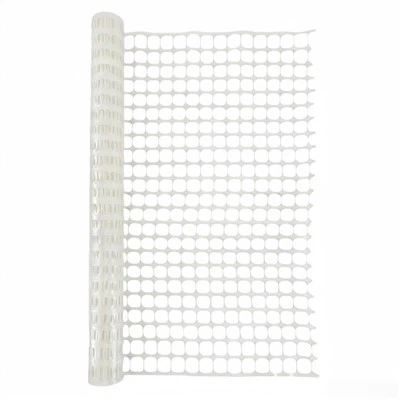
If you’re a facility manager, groundskeeper, or sports director who’s tired of replacing netting every few years, dealing with sagging panels, or worried about safety hazards for players and bystanders, it’s worth looking into square netting for your space. Whether you need netting for a single field, a full multi-sport complex, or custom partitions for an indoor gym, we can work with you to find a solution that fits your needs and budget. We offer free consultations to assess your space, help you pick the right mesh size and weight, and provide installation support if you need it. At the end of the day, sports are about playing well and staying safe, and the right netting is a small but essential part of making that happen. If you’re ready to upgrade your facility’s netting, reach out to us to discuss your project. We can’t wait to help you make your sports space safer, more durable, and better for everyone who uses it.
Diamond Fence Mesh References
American Society for Testing and Materials. (2020). Standard Specification for Netting for Sports and Recreational Facilities. ASTM International.
National Recreation and Park Association. (2021). Facility Maintenance Guide: Sports Surfaces and Safety Equipment. NRPA.
Sports Turf Managers Association. (2022). Netting Solutions for Athletic Field Containment and Wildlife Deterrence. STMA Journal.
Shaoxing Yongte Plastics Co., Ltd.
We are one of the most reliable square netting manufacturers and suppliers in China, specialized in providing high quality customized products. We warmly welcome you to wholesale discount square netting for sale here from our factory. Contact us for pricelist and free sample.
Address: INDUSTRIAL PARK, LIZHU TOWN, KEQIAO DISTRICT, SHAOXING CITY, ZHEJIANG PROVINCE
E-mail: support@sxxyongte.com.cn
WebSite: https://www.fenceplastic.com/
