If you’ve ever found yourself staring at a broken wood chipper blade or a clogged pellet mill die at 7 a.m. on a Monday—back when your workshop is still half-lit and you’re rushing to get orders out on time—you’ve probably asked a simple question: “Do I really need special tools to replace these spare parts?” As someone who’s spent the last 12 years as a supplier for wood chipper and pellet mill spare parts, I’ve fielded this exact question from small-scale farm operators, startup biomass plants, and even seasoned industrial maintenance teams. I’ve seen guys grab a random wrench and twist a blade right into pieces, and I’ve seen teams waste two full days waiting for a specialty tool that could’ve been in their hands in 20 minutes. Today, let’s cut through the noise and get real about what you actually need, what’s a gimmick, and when skipping the right tools will cost you way more than investing in them. Wood Chipper and Pellet Mill Spare Part
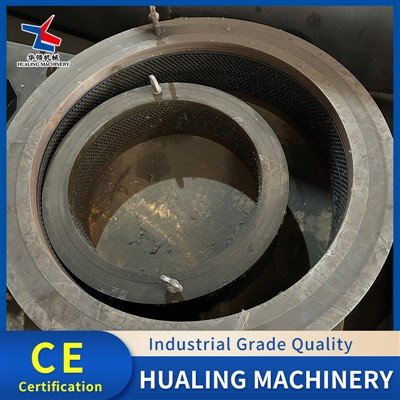
First, let’s ground this in the parts we’re talking about, because not all spare parts are created equal— and that changes everything. A wood chipper’s most critical wear parts are its chipper blades, right? Those are thick, hardened steel pieces that spin at up to 3,000 RPM, slicing through logs, branches, and even small pallets. Then you have pellet mill dies and rollers—those are the workhorses that compress ground sawdust into dense, uniform pellets, usually at pressures over 100 tons per square inch. When you replace these, you’re not just swapping a bolt here or a filter there; you’re working with parts that are engineered to extreme tolerances, and cutting corners on tools here isn’t just a hassle—it’s a safety hazard.
Let’s start with the myth that you can just use regular hand tools for everything. I once worked with a family-owned farm in western Ohio that had 10 wood chippers, and their maintenance guy swore by his socket set from the local hardware store. He replaced chipper blades for years without a problem… until he didn’t. He skipped the torque wrench on a set of new blades because he “remembered how tight they felt last time,” and two weeks later, a blade came loose mid-cycle, bounced off the chipper frame, and dented a steel bin so badly it took a week to repair. The cost of that dent? $1,200 in parts and lost production time. The torque wrench he refused to buy that day? $85. That’s not a fluke—that’s the kind of mistake that happens when you skip basic specialized tools.
Now, let’s get specific. Let’s break down the most common spare part replacements and the tools you actually need, no fluff.
First up: replacing wood chipper blades. The two non-negotiable tools here are a quality torque wrench and a blade balancing fixture. Wait—you’ve never heard of a blade balancing fixture? Let me explain. When you remove a chipper blade, it’s got a lot of mass, and if you don’t balance it with the other blades on the rotor, you’re going to get unnecessary vibration. That vibration wears out bearings, shortens the life of your chipper’s engine, and makes your finished wood chips inconsistent in size. You don’t need a fancy industrial balancing machine; a basic blade balance fixture—think a simple stand that lets you rest the blade on two hardened steel pins to check for wobble—costs around $120, and it’s a one-time purchase that pays for itself in three blade changes. A torque wrench? Here’s why that’s not a gimmick: chipper blade bolts are torqued to 150–250 foot-pounds, depending on the machine model. A regular wrench or even a cordless impact driver can give you a “tight” feel, but it’s not precise enough. Too loose, and the blade comes off. Too tight, and you’ll strip the bolt or crack the blade itself. I’ve seen cracked blades that were over-torqued get replaced in a week, when a torque wrench would’ve let them hit the exact specification and last six months.
What about the tools you can skip? Let’s be clear: you don’t need a $5,000 hydraulic press for most small to medium wood chippers. A standard 20-ton hydraulic press works, but don’t let the sales rep talk you into a specialty “chipper blade press” unless you’re running a 100+ horsepower industrial chipper. For most operators, a good set of grade 8 bolts (which we also supply, by the way) and a torque wrench is all you need.
Now let’s move to pellet mill parts, because this is where a lot of my customers get tripped up. Pellet mill dies and rollers are precision parts. When you replace a die, you’re dealing with a thick steel ring that has hundreds of small holes drilled through it, designed to push sawdust through and form pellets. The tool you absolutely cannot skip here is a die puller. Wait—why can’t you just use a pry bar? I’ve seen a guy use a pry bar on a pellet die, and he scratched the inner bore of the mill’s main housing. That scratch cost him a new housing, which is $3,000, because the scratch created a uneven surface that caused the new die to wear out in two weeks instead of six months. A die puller is a specialized tool that clamps securely to the edge of the die and uses the mill’s own hydraulic system (or a small manual pump) to pull the die straight out, no scratching, no prying. For most pellet mills up to 500 horsepower, a basic die puller runs around $350, and it’s the kind of tool that doesn’t wear out—we’ve had customers use the same puller for 10 years.
Then there’s replacing pellet mill rollers. Rollers sit on bearings inside the mill, and when you take them out, you need a roller puller and a roller installer. Again, no, you can’t use a regular puller. Rollers are pressed onto shafts with a lot of force, and a regular puller can damage the bearing races or bend the shaft, which means you’re buying a new shaft for $800 instead of a new roller for $400. I once had a customer bring me a bent pellet mill shaft because he used a generic puller on a roller; he had to shut down his operation for three days waiting for a replacement, and that lost revenue alone was more than the cost of a good roller puller.
Now, let’s talk about the gray area—what tools are nice to have, but not essential? For example, a blade sharpening tool. Wait, if you’re replacing spare parts, do you need to sharpen your own blades? It’s not required for every replacement, but if you’re doing it yourself, a basic bench grinder with a blade jig to hold the angle is a good investment. You don’t need a CNC blade sharpening machine, but a $150 jig will keep your blade angles consistent, which means they cut better and last longer. For pellet mills, a die hole cleaning tool—like a small pneumatic drill with a carbide tip to clear clogged holes— is helpful if you’re reconditioning dies, but if you’re replacing a worn die, you don’t need it.
Let’s also address a common misconception from small-scale operators: “I have a small 10 horsepower chipper, so I can use whatever I have.” I get it—you’re trying to keep costs down, and you don’t have a big maintenance budget. But I’ve seen small operators lose weeks of production because they skipped a $10 torque wrench. Last year, a customer with a 10 HP residential wood chipper tried to replace his blades with a $10 garage socket set, and three days later, the blade came loose, destroyed the chipper’s discharge chute, and he had to wait a week for a replacement chute. The total cost? $2,100 for parts and lost work, compared to the $85 he would’ve spent on a torque wrench that fits his small model. Size doesn’t matter when it comes to tolerance—even small machines have precision parts that need the right tools.
Now, let’s talk about when you can safely skip specialized tools. If you’re replacing a small, non-load-bearing part—like a filter, a belt, or a guard—you don’t need anything fancy. A regular wrench works fine here. But if you’re replacing a high-wear part that spins under load (chipper blades, pellet dies, rollers), always use the tools designed for that part.
I also want to be honest about what suppliers like me do to help, because that’s part of the equation. When you buy a spare part from us, we don’t just ship the part—we include a spec sheet that tells you exactly what tools you need, the torque specs, and even a step-by-step guide for replacement. For example, when we send a new pellet die, we note that you need a die puller rated for your mill model, and we can even recommend a trusted supplier for the tool if you don’t have one. We also offer free video walkthroughs for replacement, because we don’t want you to make a mistake that costs you more than the part itself.
Let’s circle back to that original question: Do I need special tools to replace wood chipper and pellet mill spare parts? The short answer is: For high-wear, load-bearing parts—yes, you need specialized tools. For small, low-load parts—no, regular tools work. But here’s the thing: the “specialized tools” aren’t the fancy, overpriced gadgets salesmen try to sell you. They’re simple, durable tools that cost a few hundred dollars at most, and they save you thousands in repairs, downtime, and replacement parts.
I’ve spent 12 years in this industry, and I can tell you that the #1 mistake people make when replacing these parts is trying to save a few bucks on tools and ending up paying for it tenfold. I’ve seen guys throw out a $50 chipper blade because they over-torqued it and cracked it, I’ve seen plants shut down for days because a scratched die housing meant a new $3,000 part, and I’ve seen small farmers lose harvest revenue because a loose chipper blade destroyed their equipment. All of these mistakes could’ve been avoided with a $85 torque wrench or a $350 die puller.
If you’re getting ready to replace a wood chipper blade, a pellet mill die, or any high-wear spare part, here’s my advice: First, check the part’s spec sheet—we always include ours with every order. It will list exactly the tools you need. Second, don’t buy the cheapest tool you can find. A torque wrench from a no-name brand might seem like a deal, but it can be off by 50 foot-pounds, which is worse than no torque wrench at all. Third, if you’re not sure what tool you need, reach out—we’re here to help. We’ve worked with thousands of operators, from small farms to large industrial plants, and we can tell you exactly what you need for your specific machine.
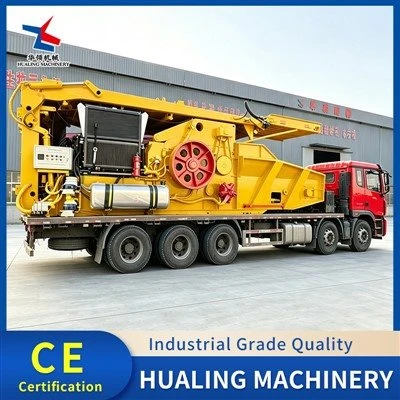
At the end of the day, replacing wood chipper and pellet mill spare parts isn’t just about swapping out a worn piece of metal—it’s about keeping your equipment running safely, avoiding costly downtime, and making sure your finished product is consistent. The tools don’t have to be fancy, but they do have to be right. If you’re ready to order spare parts, or if you have questions about what tools you need for your replacement, don’t hesitate to reach out to discuss your specific needs and get the right parts and tools for your operation.
Wood Shredder References
- American Society of Agricultural and Biological Engineers. (2020). Safety Standards for Agricultural Wood Chippers and Pellet Mills. ASABE S354.
- Wood Industry Maintenance Association. (2021). Best Practices for Replacing High-Wear Parts in Wood Processing Equipment. WIMA Technical Bulletin 17.
- Pellet Production Association. (2022). Precision Tolerance Requirements for Pellet Mill Dies and Rollers. PPA Technical Report 09-22.
- Occupational Safety and Health Administration. (2019). Machine Guarding and Maintenance for Forestry and Wood Processing Equipment. OSHA 3205-19.
Shandong Hualing Machine Manufacturing Co., Ltd.
As one of the most professional wood chipper and pellet mill spare part manufacturers and suppliers in China, we also support customized service with low price. Please rest assured to buy discount wood chipper and pellet mill spare part in stock here from our factory. If you have any enquiry about quotation, please feel free to email us.
Address: Industrial Park, Dagong Village, Changshan Town, Zouping City, Shandong Province
E-mail: hualing@sdhualing.com
WebSite: https://www.hualingmachine.com/
