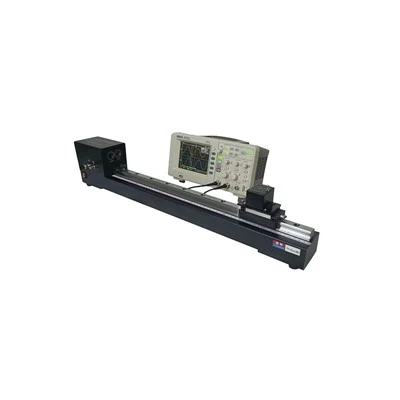
As a supplier of AMO Physics Instruments, I often receive inquiries from customers about the adaptability of our products in various environments, especially high – altitude environments. This question is not only crucial for scientific research institutions, military applications, but also for industries such as aerospace and mountain exploration. In this blog, I will delve into the feasibility of using AMO Physics Instruments in high – altitude environments, taking into account relevant physical principles and practical examples. AMO Physics Instruments
Physical Challenges in High – Altitude Environments
The phrase “high – altitude environment” generally refers to areas above 5000 meters or even higher, such as the summit of Mount Everest or the cruising altitude of airplanes. These environments present several unique physical characteristics that can potentially affect the performance of AMO Physics Instruments.
One of the most prominent factors is reduced air pressure. As we ascend in the atmosphere, the air pressure drops significantly. According to the barometric formula, the air pressure (P) at a certain altitude (h) can be approximated as (P = P_0e^{-\frac{Mgh}{RT}}), where (P_0) is the sea – level pressure, (M) is the molar mass of air, (g) is the acceleration due to gravity, (R) is the ideal gas constant, and (T) is the absolute temperature. This exponential decrease in pressure can have implications for instruments that rely on air – based operations.
Another factor is temperature variation. High – altitude environments are often much colder than at sea level. The average temperature lapse rate in the troposphere is about 6.5°C per 1000 meters of altitude increase. Additionally, the temperature can fluctuate greatly between day and night, which may cause thermal expansion and contraction of instrument components, leading to mechanical stress and potential damage.
Furthermore, high – altitude areas are often exposed to stronger solar radiation, including ultraviolet (UV) and cosmic rays. These radiations can cause chemical degradation of materials and affect the electrical and optical properties of instrument components.
Impact on Different Types of AMO Physics Instruments
Atomic and Molecular Spectroscopy Instruments
Atomic and molecular spectroscopy instruments, such as atomic absorption spectrometers and Raman spectrometers, are designed to analyze the interaction between light and atoms or molecules. In high – altitude environments, the reduced air pressure can affect the optical path and the gas – phase composition within the instrument. For example, some spectrometers rely on the absorption or emission of light by specific gases. A change in air pressure can alter the gas density, leading to deviations in the measured absorption or emission spectra.
However, modern AMO Physics Instruments are often equipped with sealed optical chambers and precise calibration mechanisms. These features can compensate for the changes in air pressure to a certain extent. For instance, some spectrometers use pressure – controlled chambers to maintain a stable internal pressure, ensuring accurate and reproducible measurements.
Atomic Force Microscopes (AFMs)
AFMs are used to image and manipulate surfaces at the atomic and molecular scale. The operation of an AFM is based on the interaction between a sharp probe and the sample surface. In high – altitude environments, the reduced air pressure can affect the damping of the probe’s vibration. In normal conditions, air molecules provide a certain amount of damping to the probe’s movement. At high altitudes, with fewer air molecules, the damping is reduced, which may cause the probe to oscillate more freely. This can potentially lead to increased noise in the AFM images.
To address this issue, some AFMs are designed with adjustable damping mechanisms. These mechanisms can be tuned to compensate for the reduced air damping at high altitudes, ensuring high – quality imaging and accurate measurements.
Cold Atom and Quantum Optics Instruments
Cold atom and quantum optics instruments are at the forefront of modern AMO physics research. These instruments rely on the precise manipulation of atoms at extremely low temperatures. In high – altitude environments, the temperature fluctuations and the increased radiation can pose significant challenges.
Temperature fluctuations can affect the cooling and trapping of atoms. For example, in a magneto – optical trap (MOT), which is commonly used to cool and trap atoms, a stable temperature is crucial for maintaining the trapping potential. Any significant temperature change can cause the atoms to escape from the trap, disrupting the experiment.
The increased radiation can also introduce noise and decoherence in quantum systems. Quantum states are extremely fragile and can be easily disturbed by external factors such as radiation. To mitigate these effects, our AMO Physics Instruments are designed with advanced shielding materials and temperature – control systems. These features help to protect the quantum systems from radiation and maintain a stable temperature environment, even in high – altitude conditions.
Practical Examples and Case Studies
There have been several real – world applications of AMO Physics Instruments in high – altitude environments. For example, in some high – altitude astronomical observatories, atomic clocks are used to provide precise timekeeping for astronomical observations. These atomic clocks are designed to withstand the harsh environmental conditions at high altitudes, including low air pressure, low temperature, and high radiation.
In addition, some research teams have used AMO Physics Instruments for high – altitude atmospheric research. They have deployed spectrometers and other instruments on high – altitude balloons to study the composition and properties of the upper atmosphere. These instruments have been able to operate effectively in the challenging high – altitude environment, providing valuable data for atmospheric science research.
Adaptation and Modifications for High – Altitude Use
To ensure the reliable operation of AMO Physics Instruments in high – altitude environments, several adaptation and modification strategies can be employed.
First, the materials used in the instruments should be carefully selected. For components that are exposed to the external environment, materials with high resistance to cold, radiation, and low – pressure conditions should be chosen. For example, some optical components can be made of special glasses that are resistant to UV radiation.
Second, the instruments should be equipped with proper insulation and temperature – control systems. These systems can help to maintain a stable internal temperature, protecting the sensitive components from temperature fluctuations.
Third, calibration procedures should be adjusted for high – altitude use. Since the physical properties of the environment change at high altitudes, the instrument’s calibration curves may need to be re – calibrated to ensure accurate measurements.
Conclusion
In conclusion, while high – altitude environments present several challenges to the operation of AMO Physics Instruments, with proper design, adaptation, and modification, our AMO Physics Instruments can be effectively used in these environments. The key lies in understanding the physical characteristics of the high – altitude environment and implementing appropriate measures to overcome the challenges.
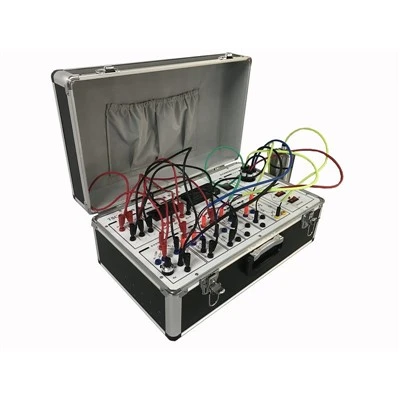
Mechanical instruments If you are interested in using AMO Physics Instruments for high – altitude applications or have any other inquiries, we welcome you to reach out for a detailed procurement discussion. Our team of experts is ready to provide you with the best solutions tailored to your specific needs.
References
- Wallace, J. M., & Hobbs, P. V. (2006). Atmospheric Science: An Introductory Survey. Academic Press.
- Tittel, F. K., & Wysocki, G. (Eds.). (2012). Handbook of Laser Spectroscopy. John Wiley & Sons.
- Dürr, S., & Rempe, G. (Eds.). (2009). Matter – Wave Interferometry. Springer.
Nanjing Longbow Scientific&Educational Instrument Co., Ltd.
As one of the most professional amo physics instruments manufacturers and suppliers in China, we’re featured by quality products and good service. Please rest assured to buy customized amo physics instruments from our factory. If you have any enquiry about pricelist, please feel free to email us.
Address: Room D, 22th floor, No.305, North Jiangdong Road, Nanjing,Jiangsu Province, China
E-mail: 79425380@qq.com
WebSite: https://www.lb-physics.com/
